Categories
  • Crystals(20)
View Mode:result_1_0result_1_1result_2_0result_2_1
Email

Leave Us A Message!

We`re not around but we still want to hear from you! Leave us a note:

SEND
EmailWhatsApp
*You can contact us directly on WhatsApp!
  • img

    SSPT7F-12.5PF10PPM

    CRYSTAL 32.7680KHZ 12.5PF SMD

    Seiko Instruments

  • img

    SSPT7F-12.5PF20PPM

    CRYSTAL 32.7680KHZ 12.5PF SMD

    Seiko Instruments

  • img

    SSPT7F-7PF20PPM

    CRYSTAL 32.7680KHZ 7PF SMD

    Seiko Instruments

  • img

    SSPT7F-12.5PF5PPM

    CRYSTAL 32.7680KHZ 12.5PF SMD

    Seiko Instruments

  • img

    SC16S-12.5PF20PPM

    CRYSTAL 32.7680KHZ 12.5PF SMD

    Seiko Instruments

  • img

    SSPT7F-9PF10-R

    CRYSTAL 32.7680KHZ 9PF SMD

    Seiko Instruments

  • img

    SSPT7F-9PF20-R

    CRYSTAL 32.7680KHZ 9PF SMD

    Seiko Instruments

  • img

    SC12S-7PF20PPM

    CRYSTAL 32.7680KHZ 7PF SMD

    Seiko Instruments

  • img

    SC12S-9PF20PPM

    CRYSTAL 32.7680KHZ 9PF SMD

    Seiko Instruments

  • img

    SC32S-9PF20PPM

    CRYSTAL 32.7680KHZ 9PF SMD

    Seiko Instruments

  • img

    SC16S-7PF20PPM

    CRYSTAL 32.7680KHZ 7PF SMD

    Seiko Instruments

  • img

    VT200F-6PF20PPM

    CRYSTAL 32.7680KHZ 6PF TH

    Seiko Instruments

  • img

    SC12S-12.5PF20PPM

    CRYSTAL 32.7680KHZ 12.5PF SMD

    Seiko Instruments

  • img

    SC20S-12.5PF20PPM

    CRYSTAL 32.7680KHZ 12.5PF SMD

    Seiko Instruments

  • img

    SC20S-7PF20PPM

    CRYSTAL 32.7680KHZ 7PF SMD

    Seiko Instruments

  • img

    SC32S-12.5PF20PPM

    CRYSTAL 32.7680KHZ 12.5PF SMD

    Seiko Instruments

  • img

    SSPT7F-12.5PF20-R

    CRYSTAL 32.7680KHZ 12.5PF SMD

    Seiko Instruments

  • img

    SSPT7F-7PF20-R

    CRYSTAL 32.7680KHZ 7PF SMD

    Seiko Instruments

  • img

    SC32S-7PF20PPM

    CRYSTAL 32.7680KHZ 7PF SMD

    Seiko Instruments

  • img

    VT200F-12.5PF20PPM

    CRYSTAL 32.7680KHZ 12.5PF TH

    Seiko Instruments

  • Total 20
    • 1

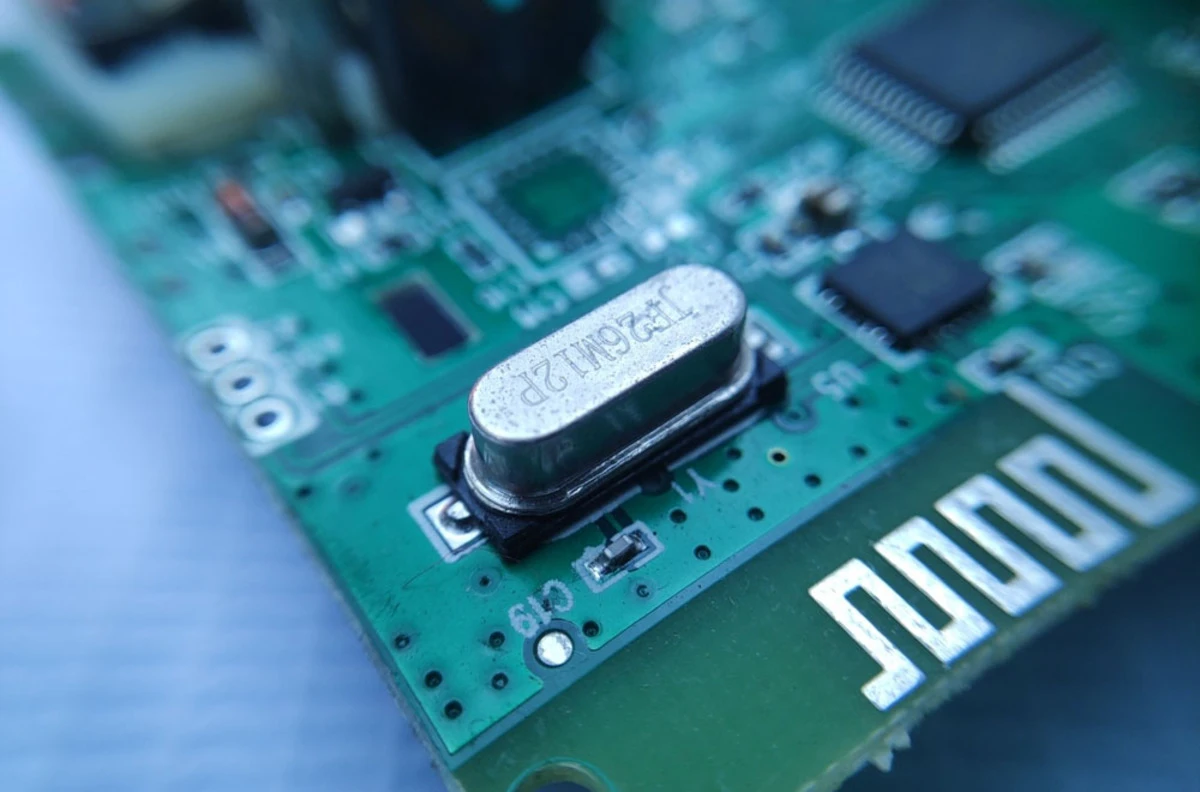
    What Are Crystal In Electronics?

    Crystal products are passive components primarily utilized as time or frequency references in electronic systems. They consist of a piezoelectric crystal that vibrates mechanically at a specific frequency. To function properly, they need an external oscillator circuit with carefully calibrated capacitance, drive voltage, and series resistance to produce a signal at the crystal's indicated frequency. This setup must operate effectively across the specified temperature range without harming the crystal element. Active devices that incorporate this essential circuitry are classified as oscillators and listed separately.

    Crystal


    How Does a Crystal Work in Electronics?

    A crystal operates in electronics by utilizing its unique physical properties to produce a stable and accurate frequency. The key to its functionality lies in its ability to vibrate at a specific frequency.

    When an electrical voltage is applied, the crystal experiences the piezoelectric effect, which causes it to deform or vibrate at its natural or resonant frequency. This resonant frequency is influenced by the crystal's physical characteristics, including its shape, size, and lattice structure.

    The vibrating crystal generates electrical signals at a precise frequency, which are used to regulate timing in electronic circuits. These signals serve as clock signals in digital circuits, ensuring synchronized operations and accurate timing intervals.

    The inherent stability of the crystal's frequency is essential for reliable performance. It maintains its resonant frequency with minimal variation, even under changing environmental conditions like temperature and pressure. This stability is crucial for accurate timekeeping and synchronization in electronic devices.

    Incorporating a crystal into electronic circuits provides a reference point for generating stable and predictable frequencies. The oscillation frequency is determined by the crystal's physical attributes, such as its thickness and cut, and can be adjusted with external components to meet specific device requirements.

    Overall, the precise vibrations of a crystal enable it to act as a dependable frequency-determining element in electronic circuits. Its ability to maintain stable frequencies makes it an essential component for various applications that depend on accurate timing and synchronization.

    Filters
    ApplyReset All
    • Manufacturers
    • Stocking Options
    • Environmental Options
    • Power (dBm)
    • Load Capacitance
    • Mounting Type
    • Number of Positions
    • Operating Mode
    • Operating Temperature
    • Output
    • Package / Case
    • Package Accepted
    • Phase Noise Typ (dBc/Hz)
    • Impedance
    • Programmable Type
    • Pushing (MHz/V)
    • Ratings
    • Size / Dimension
    • Specifications
    • Spread Spectrum Bandwidth
    • Tuning Voltage (VDC)
    • Type
    • Voltage - Supply
    • Frequency
    • Absolute Pull Range (APR)
    • Accessory Type
    • Available Frequency Range
    • Base Resonator
    • Capacitance
    • Current - Supply (Max)
    • ESR (Equivalent Series Resistance)
    • Features
    • For Use With/Related Products
    • 2nd Harmonic, Typ (dBc)
    • Frequency - Center
    • Frequency Range
    • Frequency Stability
    • Frequency Stability (Total)
    • Frequency Tolerance
    • Function
    • Height
    • Height - Seated (Max)
    • Icc Max
    Attribute column