Categories
  • Microprocessors(101)
View Mode:result_1_0result_1_1result_2_0result_2_1
Email

Leave Us A Message!

We`re not around but we still want to hear from you! Leave us a note:

SEND
EmailWhatsApp
*You can contact us directly on WhatsApp!
  • img

    96MPI3K-3.4-3M11T

    IC MPU KABY LK 3.4GHZ 1151FCLGA

    Advantech Corp

  • img

    96MPCLK-2.7-2M11T

    IC MPU KABY LK 2.7GHZ 1151FCLGA

    Advantech Corp

  • img

    96MPXEK-3.8-8M11T

    IC MPU KABY LK 3.8MHZ 1151FCLGA

    Advantech Corp

  • img

    96MPXE-2.6-19M36A

    IC MPU SKYLAKE 2.6GHZ 3647FCLGA

    Advantech Corp

  • img

    96MPXE-2.3-16M36

    IC MPU SKYLAKE 2.3GHZ 3647FCLGA

    Advantech Corp

  • img

    96MPXE-2.2-19M36

    IC MPU SKYLAKE 2.2GHZ 3647FCLGA

    Advantech Corp

  • img

    96MPXE-2.2-13M36

    IC MPU SKYLAKE 2.2GHZ 3647FCLGA

    Advantech Corp

  • img

    96MPXE-2.1-33M36

    IC MPU SKYLAKE 2.1GHZ 3647FCLGA

    Advantech Corp

  • img

    96MPXE-2.1-22M36A

    IC MPU SKYLAKE 2.1GHZ 3647FCLGA

    Advantech Corp

  • img

    96MPXE-2.1-22M36

    IC MPU SKYLAKE 2.1GHZ 3647FCLGA

    Advantech Corp

  • img

    96MPXE-2.1-16M36A

    IC MPU SKYLAKE 2.1GHZ 3647FCLGA

    Advantech Corp

  • img

    96MPXE-2.1-16M36

    IC MPU SKYLAKE 2.1GHZ 3647FCLGA

    Advantech Corp

  • img

    96MPXE-2.1-11M36

    IC MPU SKYLAKE 2.1GHZ 3647FCLGA

    Advantech Corp

  • img

    96MPXE-2.0-27M36A

    IC MPU SKYLAKE 2.0GHZ 3647FCLGA

    Advantech Corp

  • img

    96MPXE-2.0-27M36

    IC MPU SKYLAKE 2.0GHZ 3647FCLGA

    Advantech Corp

  • img

    96MPXE-2.0-11M36

    IC MPU SKYLAKE 2.0GHZ 3647FCLGA

    Advantech Corp

  • img

    96MPXE-1.7-11M36

    IC MPU SKYLAKE 1.7GHZ 3647FCLGA

    Advantech Corp

  • img

    96MPI3K-3.9-3M11T

    IC MPU KABY LK 3.9GHZ 1151FCLGA

    Advantech Corp

  • img

    96MPCL-1.9F8-1M4T

    IC MPU 1.9GHZ 478LGA

    Advantech Corp

  • img

    96MPXE-3.2-8M10T

    IC MPU HASWELL 3.2GHZ 1150LGA

    Advantech Corp

  • Total 101
    • 1
    • 2
    • 3
    • 4
    • 5
    • 6

    Description of Microprocessors

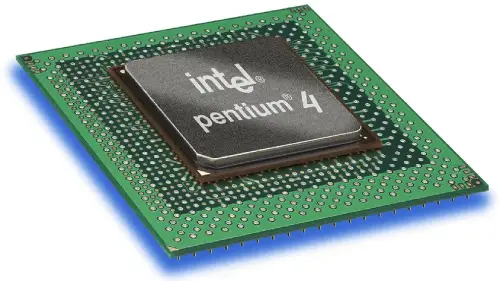
    Microprocessors are types of integrated circuits used to process information and data. They’re different from microcontrollers mainly because of how they're named, but traditionally, microprocessors don’t include built-in memory. They also usually don’t have mixed-signal features (like combining analog and digital functions) and are used in more complex software systems that run multiple tasks with the help of an operating system.
    Microprocessors

    Frequently Asked Questions

    What is a microprocessor used for?

    A microprocessor is a tiny processing unit inside a computer's CPU. It’s a single chip that handles various tasks like calculations and logical operations on digital signals. In high-performance servers, many microprocessors work together to handle data processing and analytics.

    Is a microprocessor a CPU?

    Yes, a microprocessor is another name for the Central Processing Unit (CPU). It acts as the brain for computers and many electronic devices. Multiple microprocessors often work together in data centers, supercomputers, communication equipment, and other digital devices.

    What are the 3 types of microprocessors?

    There are three main types of microprocessors:

    CISC (Complex Instruction Set Computer): Designed to handle a wide range of instructions with complex commands.

    RISC (Reduced Instruction Set Computer): Focuses on a smaller set of simple instructions for faster processing.

    EPIC (Explicitly Parallel Instruction Computing): Designed to handle multiple instructions at the same time to improve performance.

    What is a microprocessor and an example?

    A microprocessor is essentially the brain of a computer. It’s also known as a processor or CPU. It’s a single chip that includes all the essential functions of a computer’s processor. For example, the Intel Core i7 is a popular microprocessor used in many computers.

    What is the general purpose of a microprocessor?

    A microprocessor is a versatile, clock-driven chip that handles binary data. It takes input data, processes it based on instructions stored in its memory, and then produces output data, all in binary form.

    Why do we need a microprocessor?

    A microprocessor acts as the “brain” of a personal computer. It performs calculations and logical operations, provides temporary memory storage, and manages all the different parts of the computer system.

    Filters
    ApplyReset All
    • Manufacturers
    • Stocking Options
    • Environmental Options
    • Operating Temperature
    • Voltage - I/O
    • USB
    • Supplier Device Package
    • Speed
    • Security Features
    • SATA
    • RAM Controllers
    • Qualification
    • Package / Case
    • Additional Interfaces
    • Number of Cores/Bus Width
    • Mounting Type
    • Graphics Acceleration
    • Grade
    • Ethernet
    • Display & Interface Controllers
    • Core Processor
    • Co-Processors/DSP
    Attribute column