Categories
  • Photo Detectors - Remote Receiver(58)
View Mode:result_1_0result_1_1result_2_0result_2_1
Email

Leave Us A Message!

We`re not around but we still want to hear from you! Leave us a note:

SEND
EmailWhatsApp
*You can contact us directly on WhatsApp!
  • img

    RPM6938-V4

    SENSOR REMOTE REC 37.9KHZ 16M

    Rohm Semiconductor

  • img

    RPMS2381-H19E4AV

    SENSOR REMOTE REC 37.9KHZ 8M

    Rohm Semiconductor

  • img

    RPMS1401-H19E4A

    SENSOR REMOTE REC 40.0KHZ 8M

    Rohm Semiconductor

  • img

    RPMS1381-H19E4A

    SENSOR REMOTE REC 37.9KHZ 8M

    Rohm Semiconductor

  • img

    RPMS1371-H19E4A

    SENSOR REMOTE REC 36.7KHZ 8M

    Rohm Semiconductor

  • img

    RPM5540-H14E2A

    SENSOR REMOTE REC 40.0KHZ 12M

    Rohm Semiconductor

  • img

    RPM6940-V4

    SENSOR REMOTE REC 40.0KHZ 16M

    Rohm Semiconductor

  • img

    RPM7240-H5R

    SENSOR REMOTE REC 40.0KHZ 15M

    Rohm Semiconductor

  • img

    RPM7138-H5R

    SENSOR REMOTE REC 37.9KHZ 15M

    Rohm Semiconductor

  • img

    RPM6938

    SENSOR REMOTE REC 37.9KHZ 16M

    Rohm Semiconductor

  • img

    RPM6937-V4

    SENSOR REMOTE REC 36.7KHZ 16M

    Rohm Semiconductor

  • img

    RPM7237-H5R

    SENSOR REMOTE REC 36.7KHZ 15M

    Rohm Semiconductor

  • img

    RPM6937

    SENSOR REMOTE REC 36.7KHZ 16M

    Rohm Semiconductor

  • img

    RPM6936-V4

    SENSOR REMOTE REC 36.0KHZ 16M

    Rohm Semiconductor

  • img

    RPM6936

    SENSOR REMOTE REC 36.0KHZ 16M

    Rohm Semiconductor

  • img

    RPM6933-V4

    SENSOR REMOTE REC 33.0KHZ 16M

    Rohm Semiconductor

  • img

    RPM6933

    SENSOR REMOTE REC 33.0KHZ 16M

    Rohm Semiconductor

  • img

    RPM7240-H9R

    SENSOR REMOTE REC 40.0KHZ 15M

    Rohm Semiconductor

  • img

    RPM7240-H8R

    SENSOR REMOTE REC 40.0KHZ 15M

    Rohm Semiconductor

  • img

    RPM7240-H4R

    SENSOR REMOTE REC 40.0KHZ 15M

    Rohm Semiconductor

  • Total 58
    • 1
    • 2
    • 3

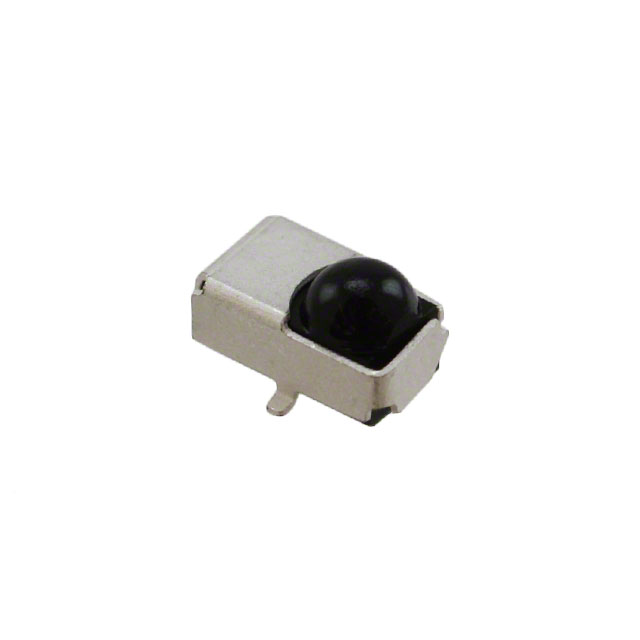
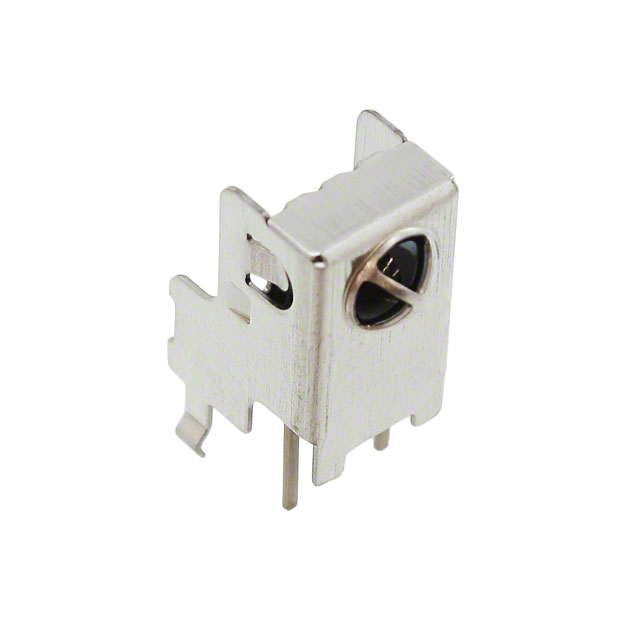
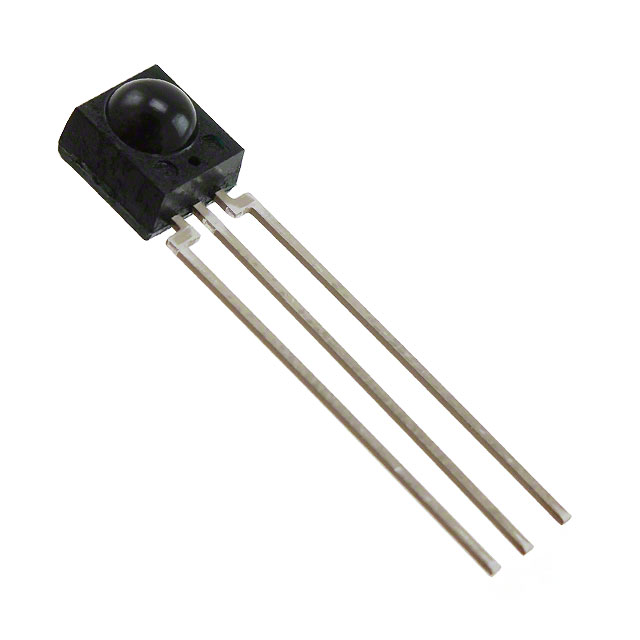
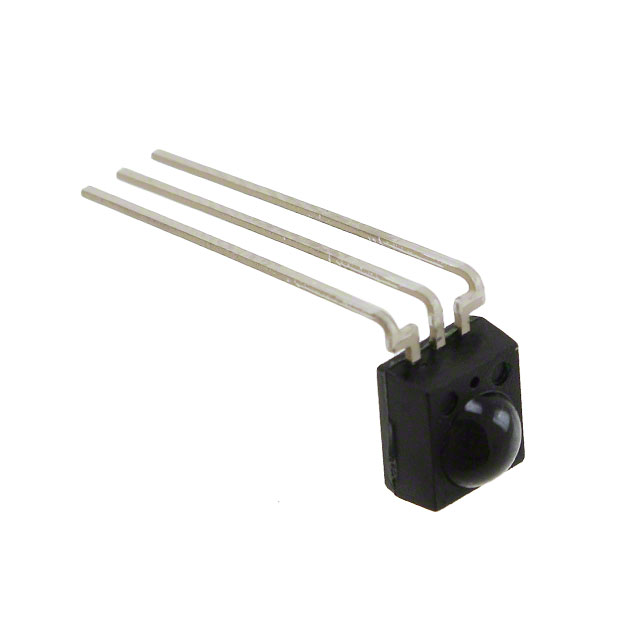
    Red remote control signals are detected by sensors that receive infrared light pulses from remote controls and convert them into electrical signals to operate electronic devices. Remote receivers are commonly found in televisions, audio systems, air conditioners, and other household appliances, known for their high sensitivity, robust anti-interference capabilities, and quick response times.


    What is Photodetector?
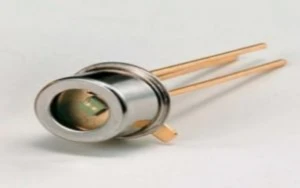
    photodetector

    A photodetector is defined as an optoelectronic device designed to detect incoming light or optical power and convert it into an electrical signal. Typically, this output signal is proportional to the incident optical power. These sensors are essential for various scientific applications, including process control, fiber optic communication systems, safety, environmental monitoring, and defense. Examples of photodetectors include phototransistors and photodiodes.


    Working of Photodetector


    The fundamental principle of a photodetector is that when incident light or radiation strikes its surface and is absorbed, it is converted into electrical signals.


    A photodetector functions as a reverse-biased p-n junction. Here’s how it operates:


    There are three processes involved in the functioning of the photodetector:


    Absorption

    In this stage, light energy strikes the photodetector and is absorbed. Light consists of small energy packets known as photons, and multiple photons are absorbed by the photodetector. This leads to:


    • The generation of charged carriers within the device.
    • The creation of electron-hole pairs (e- and h+).


    Transportation of Carriers

    Here, the generated charge carriers move through the absorption regions. In some photodetectors, the carriers receive a gain, resulting in the multiplication of photons during their transport.


    Extraction of Carriers as Photocurrent

    Once the charged particles (electron-hole pairs) are successfully transported, they are collected, and the resulting current flows through the external circuit as an electrical signal. This current is primarily generated by the photons hitting the photodetector, which is why it is referred to as photocurrent.

    Filters
    ApplyReset All
    • Manufacturers
    • Stocking Options
    • Environmental Options
    • B.P.F. Center Frequency
    • Current - Supply
    • Mounting Type
    • Operating Temperature
    • Orientation
    • Sensing Distance
    • Voltage - Supply
    Attribute column