


 All Products
Categories
- Shift Registers(281)





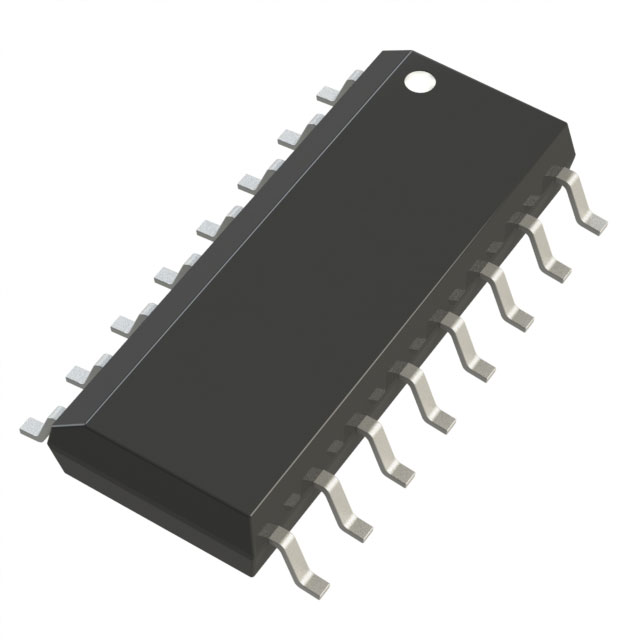
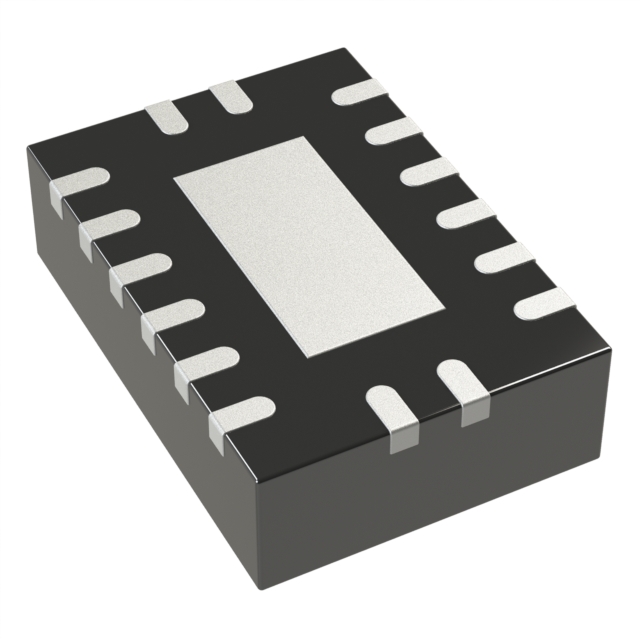
- 1
- 2
- 3
- 4
- 5
- 6
- 15
Description of Shift Registers
Shift registers are simple logic devices used to change data between serial (one bit at a time) and parallel (multiple bits at once) formats, or to shift the position of data bits within a digital word. They usually consist of a bunch of flip-flops combined into one device. While they’re often part of more complex logic devices, they’re also handy for things like I/O expansion where having them as separate components can be useful.
Frequently Asked Questions
What do shift registers do?
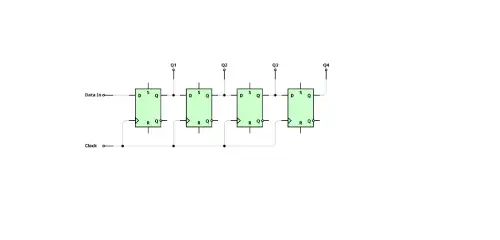
A shift register is a type of digital circuit made up of a series of flip-flops, where the output from one flip-flop connects to the input of the next. They all share the same clock signal, which makes the data move from one flip-flop to the next.
What is the general purpose of a shift register?
Shift registers are used for temporary data storage, data transfer, and data manipulation. They help create time delays in digital circuits and can handle both serial and parallel data formats.
What are the five types of shift registers?
There are actually six types of shift registers:
- Serial In Serial Out (SISO) shift register
- Serial In Parallel Out (SIPO) shift register
- Parallel In Serial Out (PISO) shift register
- Parallel In Parallel Out (PIPO) shift register
- Bidirectional Shift Register
- Universal Shift Register
When to use a shift register?
Shift registers are useful when you need to save pins on a microcontroller. Since microcontrollers have a limited number of pins for inputs and outputs, using shift registers can help control many devices, like 16 LEDs, with fewer pins.
What is the benefit of a shift register?
Shift registers have several benefits: they can store and move large amounts of data in a compact space, consume less power, and operate quickly. They also offer flexibility in data handling and conversion, making them valuable for a wide range of applications.
How to control a shift register?
To control a shift register, you set the SER (serial input) pin to LOW and then pulse the SRCLK (shift register clock) pin 8 times. After that, pulse the RCLK (register clock) pin once. Using the LSB (Least Significant Bit) method, reverse the byte string to get a value like 10001010. For each bit, set SER to either HIGH or LOW according to the value you want.
What is the basic difference between a shift register and a counter?
A counter counts clock pulses, while a shift register moves data left or right. Counters can be of different types like Asynchronous, Synchronous, Decade, MOD-N, Johnson, and Ring, among others.
What is the purpose of a shift register in a PLC?
In a PLC (Programmable Logic Controller), shift registers are often used in conveyor systems to keep track of the number of products or the position of items on the conveyor belt. They are also used for serial communication, transmitting or receiving data one bit at a time.
Are shift registers sequential?
Yes, shift registers are sequential. Data is loaded into the register all at once in parallel, with all data bits entering simultaneously. Then, the data is read out sequentially, typically from the right, representing the data that was input.
What does an 8-bit shift register do?
An 8-bit shift register helps manage multiple outputs with fewer pins. For example, if you only have a few pins available on your device, you can use an 8-bit shift register to split one signal into multiple outputs. By using this register, we were able to control 7 outputs with just 3 pins. And if we added another shift register, we could control 14 outputs using the same 3 pins!